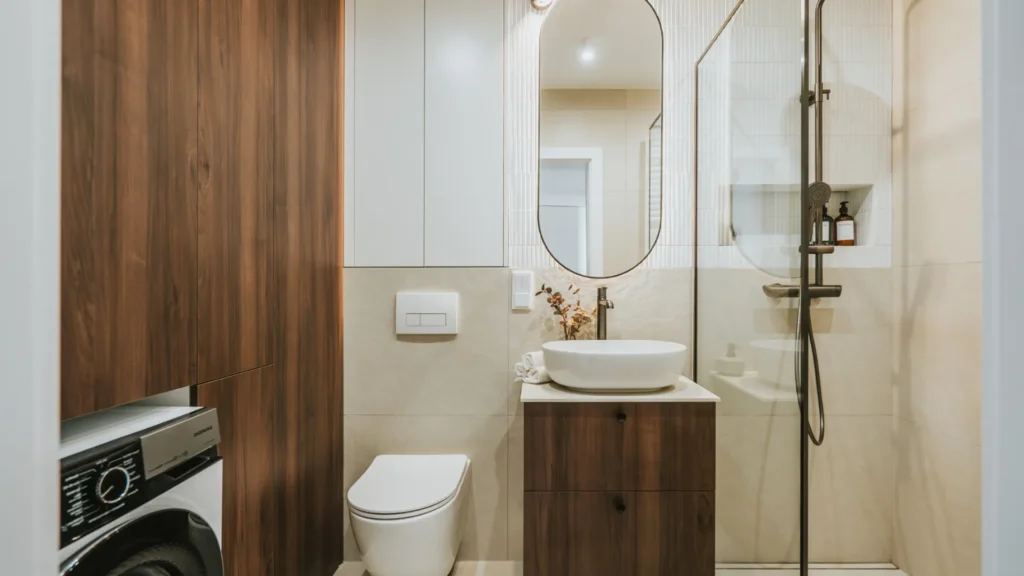
Bathroom designIt ‘s a process that requires a combination of aesthetics and technical expertise. Proper spacing between bathroom fixtures, the right selection of moisture-resistant materials, and well-planned installations have a huge impact on the comfort and durability of the interior. Below are 10 key bathroom design principles worth knowing before starting work.
Maintain the standard distances between sanitary facilities
Bathroom design is not a matter of arbitrariness and is largely based on ergonomic principles and construction standards. Although there is no single legal act in Poland regulating all distances, designers rely on Polish Standards and ergonomic guidelines.
Examples of minimum distances:
- in front of the sink: min. 70 cm of free space
- in front of the toilet bowl: min. 60–70 cm
- from the axis of the toilet bowl to the wall: min. 40 cm
- between the sink and the toilet: min. 20 cm
- entrance to the shower cabin: min. 80 cm wide
Maintaining these distances is one of the basic principles of bathroom design, affecting the comfort and safety of use.
Plan a functional layout of the zones
Every bathroom should be divided into zones: sink, toilet, and bath. Bathroom design should consider a logical sequence of use and natural circulation routes. This ensures an intuitive, comfortable, and orderly interior.
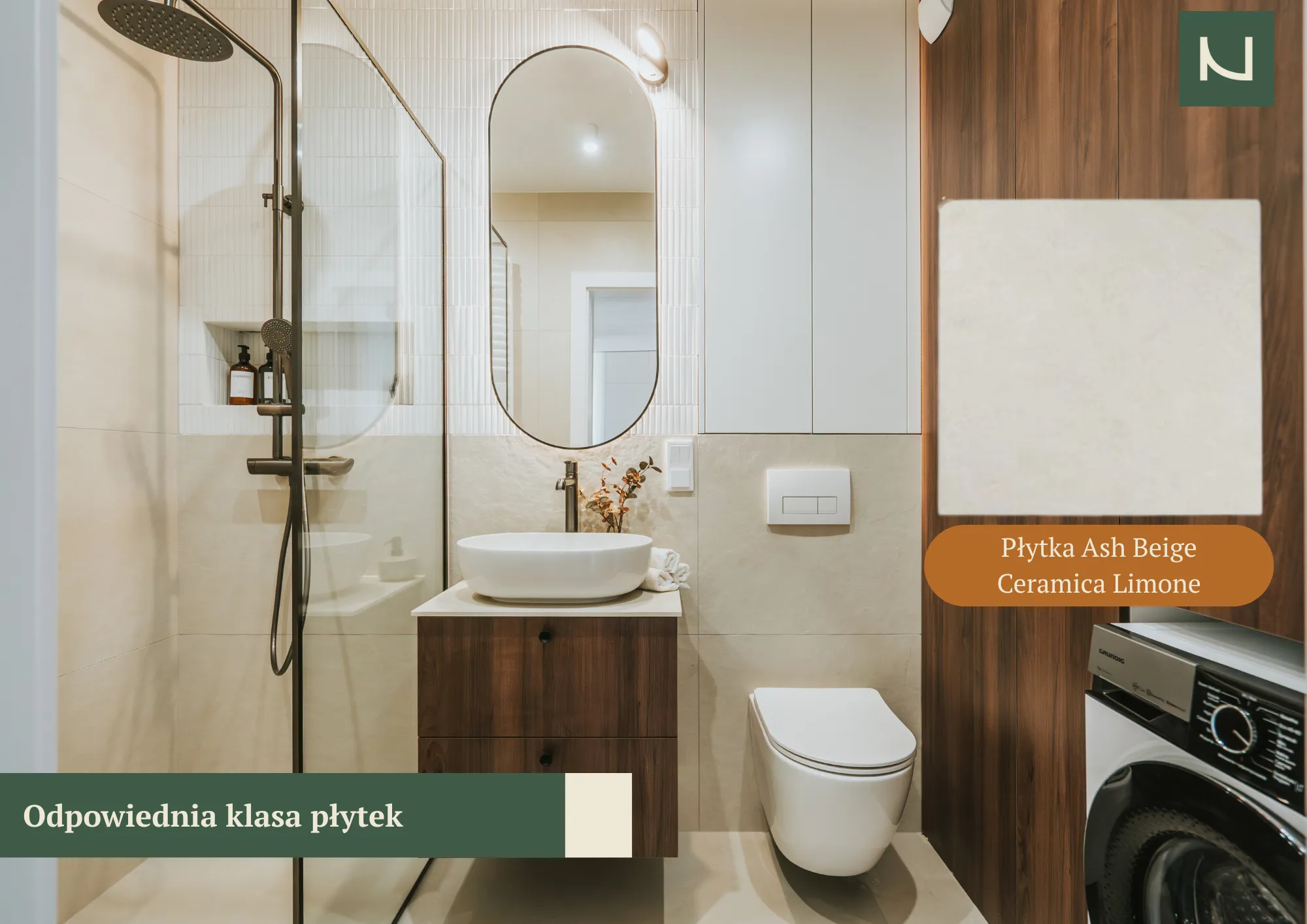
Choose materials that are resistant to water and moisture
Bathroom materials must withstand intense moisture, temperature fluctuations, and frequent cleaning. When choosing tiles, consider the following:
- water absorption – tiles with water absorption of ≤ 3% (porcelain stoneware) are best for bathrooms,
- abrasion class PE I – PEI III or higher is recommended for floors,
- anti-slip – especially in the shower area (markings R9–R11).
Well-chosen materials are a key element of lasting bathroom design.
Our proven choice that our customers love:
Bathroom design safety – non-slip floors
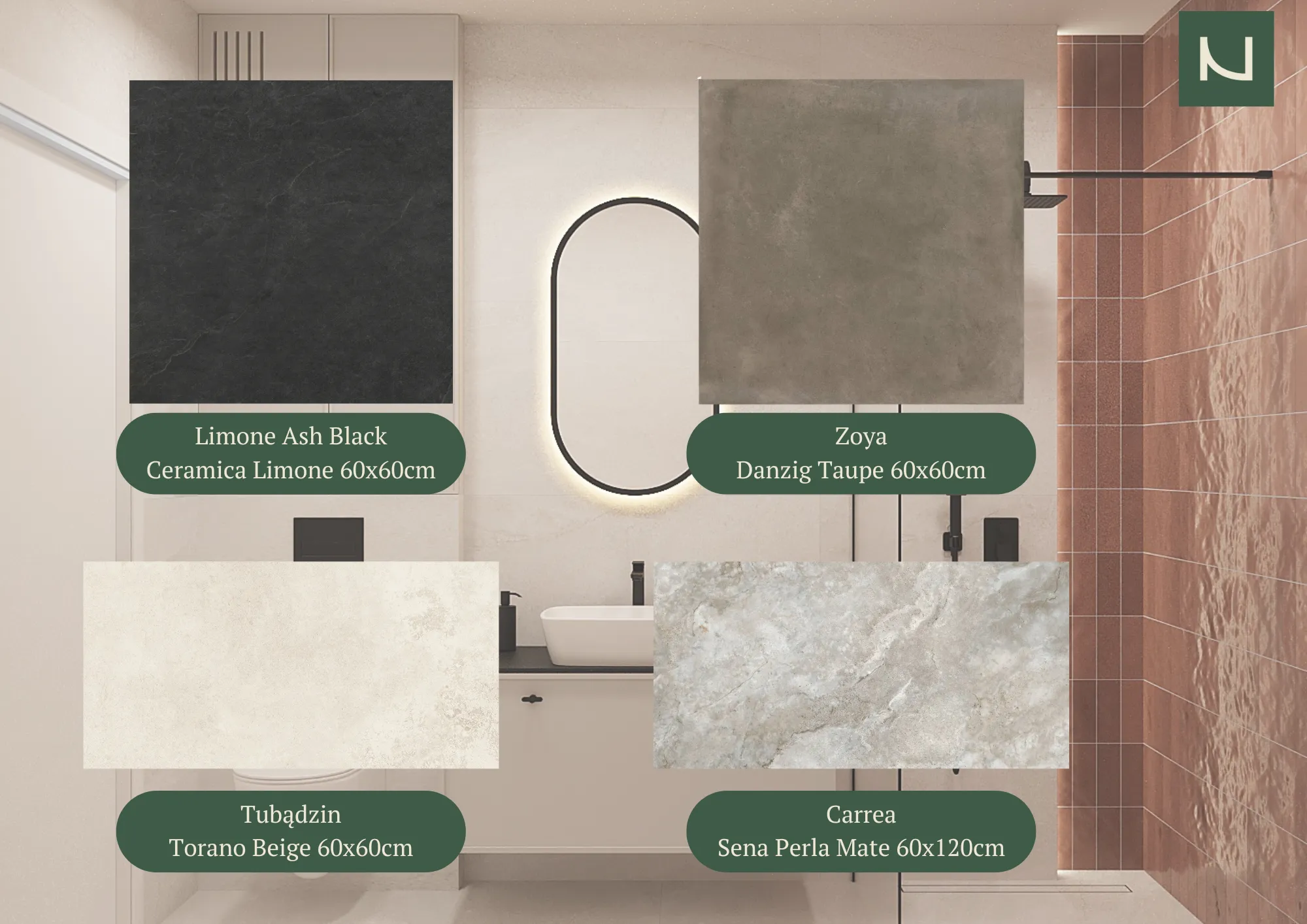
One of the most frequently overlooked principles of bathroom design is user safety. Bathroom flooring should minimize the risk of slipping, especially in homes with children or elderly residents. In wet areas, it’s best to use textured tiles or tiles with a higher anti-slip rating.
Our proven choices:
Design your plumbing and sewage systems well
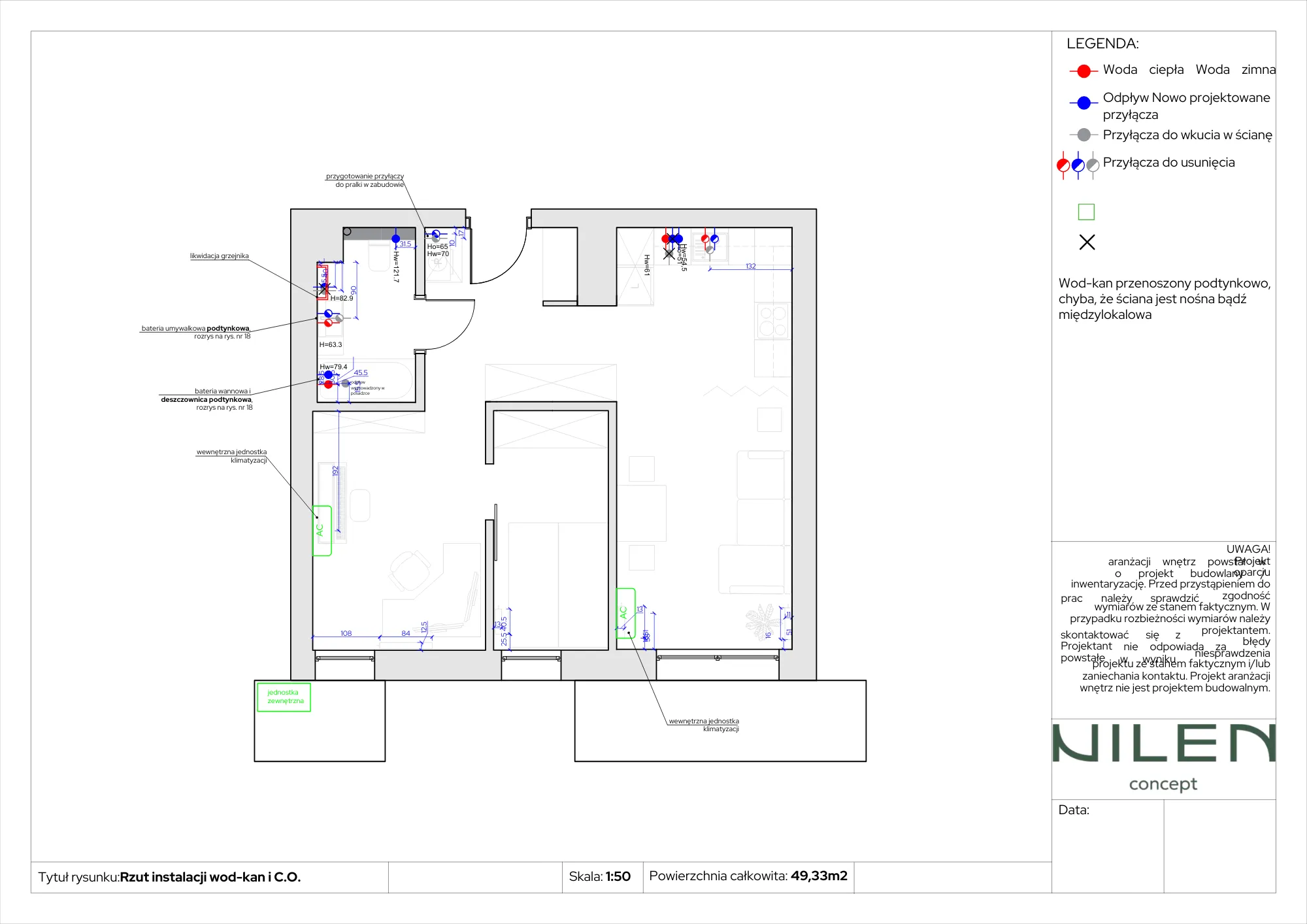
Bathroom design should begin with planning the plumbing system, as it largely determines the overall layout of the room. Therefore , the placement of risers, drains, and water connections should be carefully considered from the concept stage. Modifications to the installations at a later stage are not only costly but often difficult to implement.
In practice, bathroom plumbing should include carefully planned connections to the sink, toilet, bathtub or shower, and washing machine. Importantly, attention should be paid to pipe diameters, sewer slopes, and the location of traps, as these directly impact proper water drainage. Planning shut-off valves is equally important, as they facilitate servicing and potential repairs.
Therefore, when designing a bathroom, it’s important to also consider space for concealed frames, inspection hatches, and service access to the installation. This allows all technical components to remain concealed, yet easily accessible when needed. A well-designed installation increases the functionality of the bathroom, enhances the aesthetics of the interior, and minimizes the risk of future failures.
Example of a water and sewage installation in a technical drawing:
Plan your layered lighting
One ceiling light is not enough. A well-designed bathroom should have:
- general lighting,
- functional lighting by the mirror,
- decorative or atmospheric light.
It is also important to choose fixtures with the appropriate tightness class, in the bathroom IP44 or higher is used.
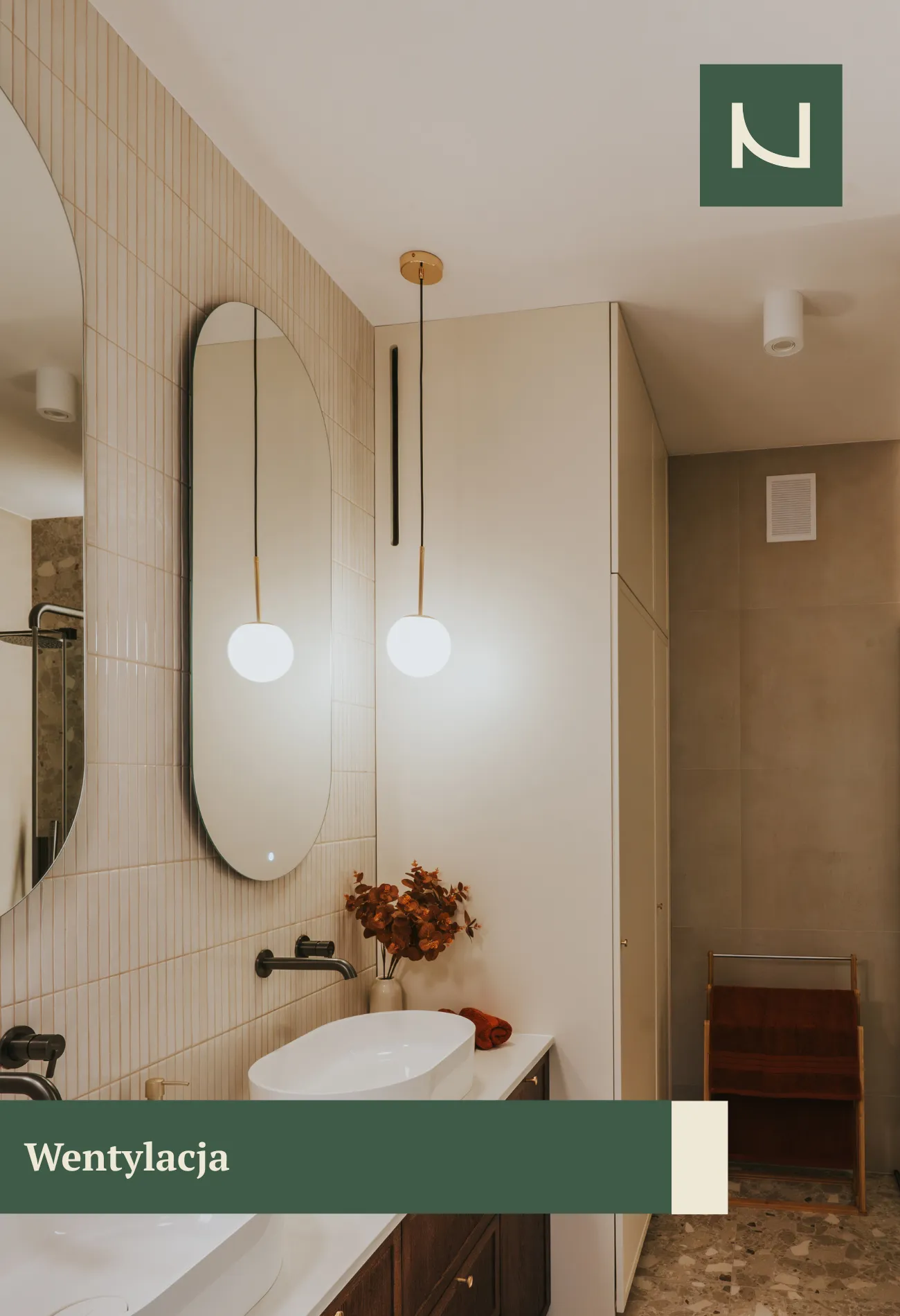
Ensure adequate ventilation
Bathroom ventilation is crucial for the durability of the finish and the health of the household. Therefore, bathroom design should always consider effective moisture management. In a room with high humidity, a lack of adequate ventilation leads to condensation, which in turn leads to mold growth and accelerated deterioration of finishing materials.
The most commonly used solution is gravity ventilation, based on a ventilation duct and exhaust grille. However, in practice, in modern, airtight buildings, it is increasingly being supplemented with mechanical ventilation or an exhaust fan. Such devices can be activated automatically or in conjunction with the lighting, further increasing their efficiency. Importantly, in windowless bathrooms, efficient ventilation is essential. This improves user comfort and significantly extends the durability of the entire bathroom design.
Plan ergonomic storage
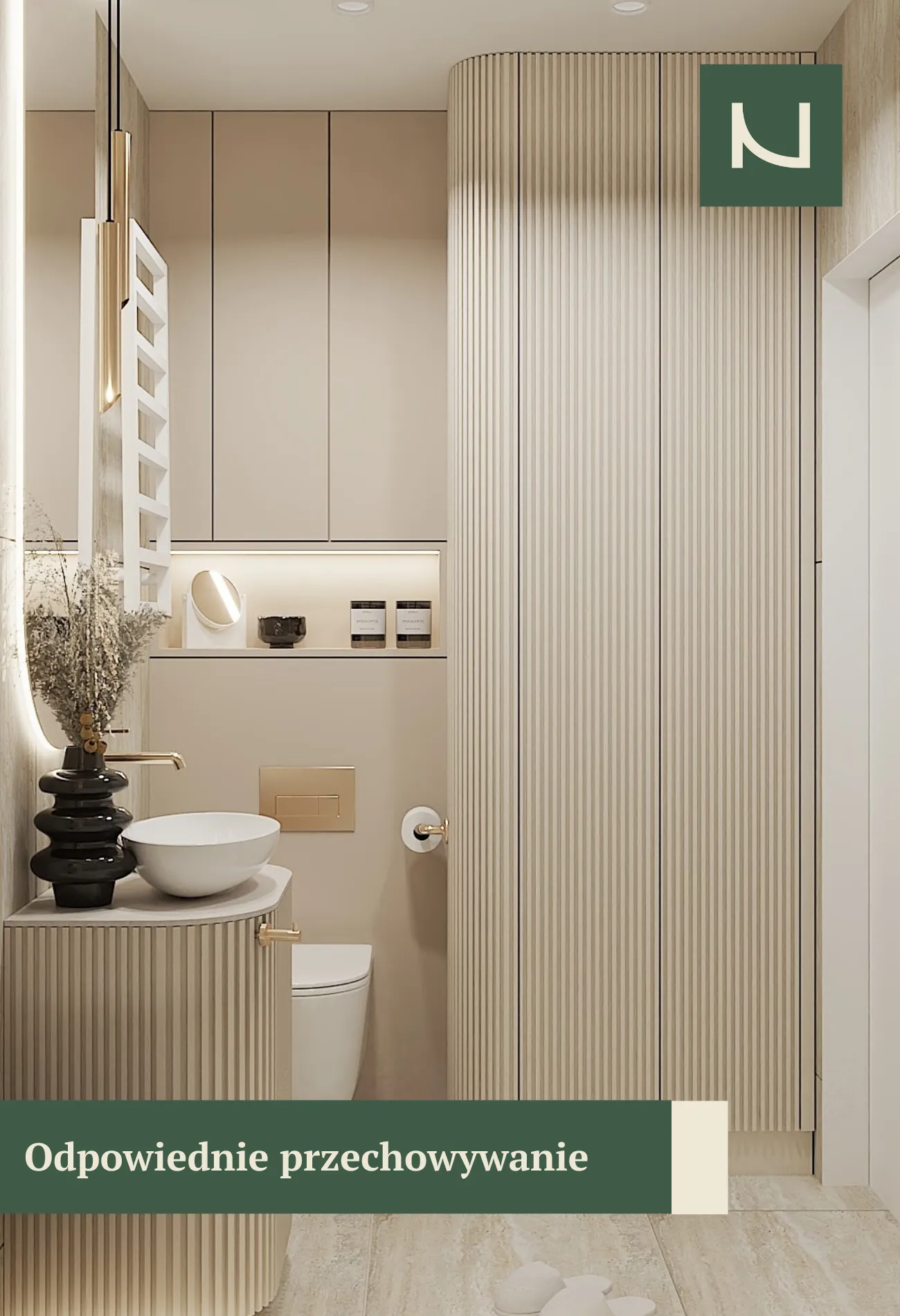
One of the key principles of bathroom design is proper storage planning. It’s important to determine where cosmetics, towels, cleaning products, and spare accessories will be stored at the design stage. This will ensure the bathroom remains organized and convenient for everyday use.
The most frequently used space is under-sink cabinets, built-in units, and wall-mounted cabinets , which don’t take up floor space. Furthermore, well-designed storage allows you to maximize even a small space. Bathroom design should also consider easy access to frequently used items, as cabinets that are too deep or poorly planned quickly become impractical. Therefore, it’s worth considering soft-close systems, pull-out baskets, and shelves, which significantly improve comfort and aesthetics.
Tailor the design to your users
Bathroom design should always consider the needs of those who will use it daily. In practice, this means that different solutions will work well in a family bathroom, a different one in a single person’s apartment, and still different ones in a guest bathroom or a rental. It’s important to determine user priorities, such as choosing between a bathtub and a shower or the amount of storage space, during the design phase.
This makes the bathroom design more functional and adaptable to the daily habits of the household. At the same time, a well-thought-out layout minimizes the risk of costly future changes. As a result, the bathroom not only looks good but also significantly improves user comfort.
Aesthetic consistency and timelessness in bathroom design
Bathroom design should be based on a consistent color scheme and a limited number of materials. Too many patterns and contrasts can overwhelm a room, especially in smaller spaces. A well-planned bathroom design should be aesthetically pleasing yet resilient to rapidly changing trends. Timeless forms, neutral colors, and simple ceramics and fixtures ensure a bathroom remains relevant for many years. Visual consistency also facilitates future design changes and improves the comfort of everyday use. And if you’re considering a comprehensive renovation of your home, contact us ! We’ll design not only a functional bathroom but also an entire apartment for you!
FAQ
What are the most important principles of designing a functional bathroom?
Maintaining appropriate distances between sanitary facilities, dividing them into zones (sink, toilet, and bath), and a logical layout of plumbing are essential. Selecting moisture-resistant materials, proper lighting, and ventilation are also crucial. A well-designed bathroom should combine aesthetics with ergonomics and the convenience of everyday use.
Why is planning bathroom installation and ventilation so important?
Plumbing and sewage systems largely determine the overall bathroom layout, so they must be carefully planned from the outset. Subsequent modifications are costly and difficult to implement. Effective ventilation is equally important, preventing moisture, mold, and the deterioration of finishing materials, while also improving the comfort of the room.
How to design a bathroom that is comfortable and timeless?
It’s important to tailor the design to the needs of the household, ensuring ergonomic storage, and consistent color and material schemes. A limited number of patterns and neutral tones ensure the bathroom stays fashionable longer and makes future changes easier. The combination of functionality, safety, and aesthetics allows you to create a comfortable interior that will last for years.