Buying an apartment from a developer is just the beginning of the journey to creating your dream interior. Developer status means that many elements still need to be refined and arranged. To avoid chaos, delays, and additional costs, it’s important to know the correct order of finishing work. This will ensure that all stages proceed smoothly and without unnecessary corrections.
Why is the order of finishing work so important?
Poorly planned renovations can lead to numerous problems. Starting at the wrong stage can easily lead to additional costs, delays, and the need for rework. For example, a freshly laid floor can be scratched during furniture assembly, or the walls can become dirty when plumbing is installed later. Incorrect order also means that you have to go back to earlier stages, which increases the implementation time.
A well-planned sequence of finishing works allows:
- avoid damage and corrections,
- better coordinate the work of different teams (electricians, plumbers, painters),
- minimize waiting time for materials and assembly,
- reduce mess and the risk of damage,
- control your budget and avoid unexpected expenses,
- make your apartment ready for occupancy faster.
Stage 1: Acceptance of the apartment and preliminary preparations
Before you begin any work, thoroughly inspect the apartment’s technical condition. This is the time to report any defects to the developer. Remember, skipping this step could cause difficulties during the renovation phase. If you don’t have experience, you can use the services of reputable inspection companies. At the same time, it’s worth:
- prepare an interior design,
- order items with long delivery times (e.g. doors, tiles, custom-made furniture),
- choose a finishing team.
Stage 2: Installations and wet work
The first step is to bring all installations to proper condition:
- distribution of electricity and sockets,
- water and sewage installations,
- possible changes in heating,
- air conditioning connection.
Next, the so-called wet work begins, encompassing all activities involving the use of mortars, adhesives, and fillers. This stage requires time and patience, as the materials must dry thoroughly to avoid cracking and unevenness in subsequent stages. Wet work includes, among others:
- plasters, finishing coats and screeds,
- possible partition walls.

Stage 3: Finishing the walls and ceilings
Once the installation and wet work are complete, the apartment is ready for the next stages of finishing. This is the time to begin the following work:
- priming,
- painting, wallpapering,
- installation of suspended ceilings and spot lighting.
Stage 4: Floors and joinery
The next step is finishing the floors. Depending on the project, the following steps are required:
- tiles,
- panels,
- parquet,
- carpet.
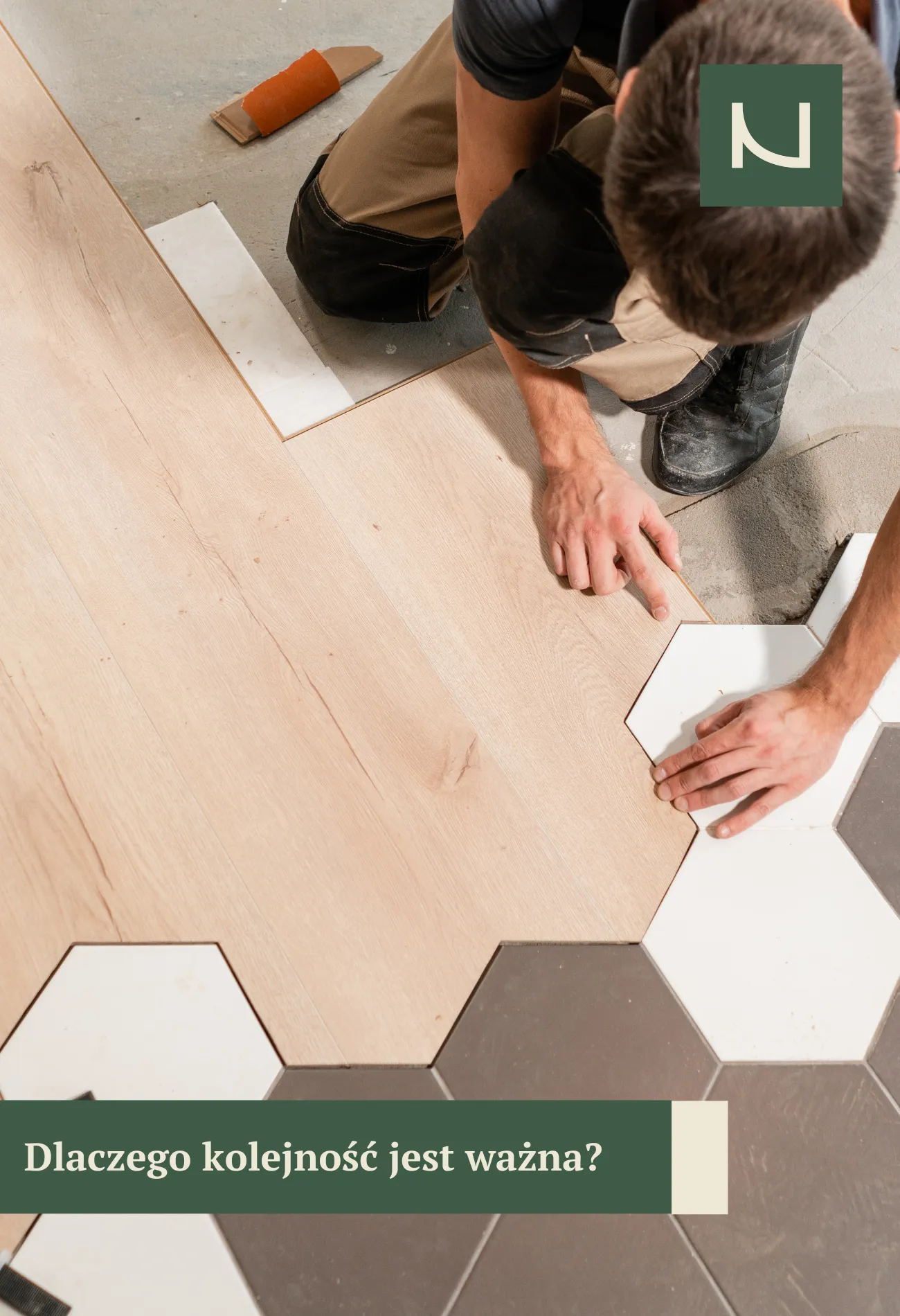
Only after the floors are finished, the interior joinery, i.e., the doors, are installed . This way, you avoid the risk of damaging them during flooring work and ensure that the door frames will be properly seated on the finished floor. Door installation is also a time when it’s worth paying attention to the aesthetic finish of the thresholds and carefully matching the joinery color to the panels, tiles, or parquet.
Step 5: Equipment assembly
This is often one of the most enjoyable parts of furnishing a home because it gives it a real look. This is the stage where:
- you assemble kitchen and bathroom furniture,
- household appliances are installed,
- sockets, contacts and lamps are installed,
- decorative elements are inserted.
Stage 6: Cleaning and final acceptance
The final step is a thorough post-renovation cleaning and acceptance of the completed work. This stage involves removing construction dust and material residue, and thoroughly cleaning all surfaces to ensure the apartment is fully ready for occupancy. It’s important to pay attention to detail: washing the windows, wiping down the baseboards, and cleaning the grout will give the interior a fresh look. After the cleaning, it’s time for the final inspection, which involves a thorough check of the quality of the work. This is where you can spot minor imperfections, such as uneven walls, misaligned doors, or improperly installed sockets. It’s better to report these immediately than to worry about making corrections later. Only after all the details have been approved and any necessary corrections made can you fully enjoy your new apartment —ready to furnish and move in.
Summary
The correct order of finishing works in a developer-finished apartment is the key to a smooth and trouble-free renovation.. By planning your activities step by step, you will avoid wasting time, additional costs and unnecessary stress.
Are you looking for a proven team to finish your apartment turnkey?
At Nilen Concept, we provide comprehensive interior design and implementation services, from concept to the final finishing touches. Thanks to the experience of our architects and construction teams, you can be sure that the work will be carried out in the correct order and without any surprises. Contact us and we will create a space perfectly suited to your needs.
FAQ
Why is the correct order of finishing works in an apartment so important?
Properly sequencing work helps avoid damage, rework, and additional costs. Proper planning allows for better coordination of crews, shortening renovation time, and minimizing the risk of damage to existing components, such as floors or walls. It also allows for more efficient budget control and faster move-in readiness.
What work should you start with when finishing an apartment in developer standard?
The first step is to conduct a technical inspection of the apartment and report any defects to the developer. Next, it’s worth preparing the interior design, ordering materials with long delivery times, and selecting a finishing team. Only after these preparations can you begin electrical and plumbing installations, as well as wet work such as plastering, finishing coats, and screeds.
What is the correct order of finishing work in an apartment?
After completing the installation and wet work, the walls and ceilings are finished, including priming, painting, and lighting installation. Next, the floors are laid and interior doors are installed. The next step involves assembling furniture, appliances, sockets, and decorations. Finally, a thorough cleaning and final inspection are performed, allowing for a thorough check of the quality of the work before moving in.