Kitchen countertop It’s one of those elements that takes the brunt of the abuse. You chop vegetables on it every day, place hot pots on it, spill things on it, and you want it to look good for years to come. It’s no wonder the question of what kitchen countertop should be made of comes back like a boomerang with every renovation.
There are several main groups of materials available on the market today : Laminates, various types of stone (natural and processed), composites, conglomerates, and even wood. Each has its own character, different maintenance requirements, and different prices. The choice isn’t obvious, but it can be sorted out.
What is the best material for kitchen countertops?
Let’s start with an important truth: there’s no single, objectively best material that suits every kitchen and lifestyle. What works great for someone who cooks occasionally may be completely ineffective in a home where the kitchen is the center of family life.
If you cook a lot, bake often, put hot trays straight from the oven on the countertop and don’t want to worry about damaging something every time, it’s worth considering stone, conglomerate or sintered quartz countertops.. These are materials designed for high resistance to temperature, scratches and moisture.
For those seeking a reasonable compromise between price and aesthetics, laminate countertops are often the ideal choice. Today’s laminates can be truly impressive – they imitate wood, concrete, or marble, while also being easy to install and replace.
The best material for a kitchen countertop is not the one “from a catalog”, but the one that actually suits your habits, budget and aesthetics.
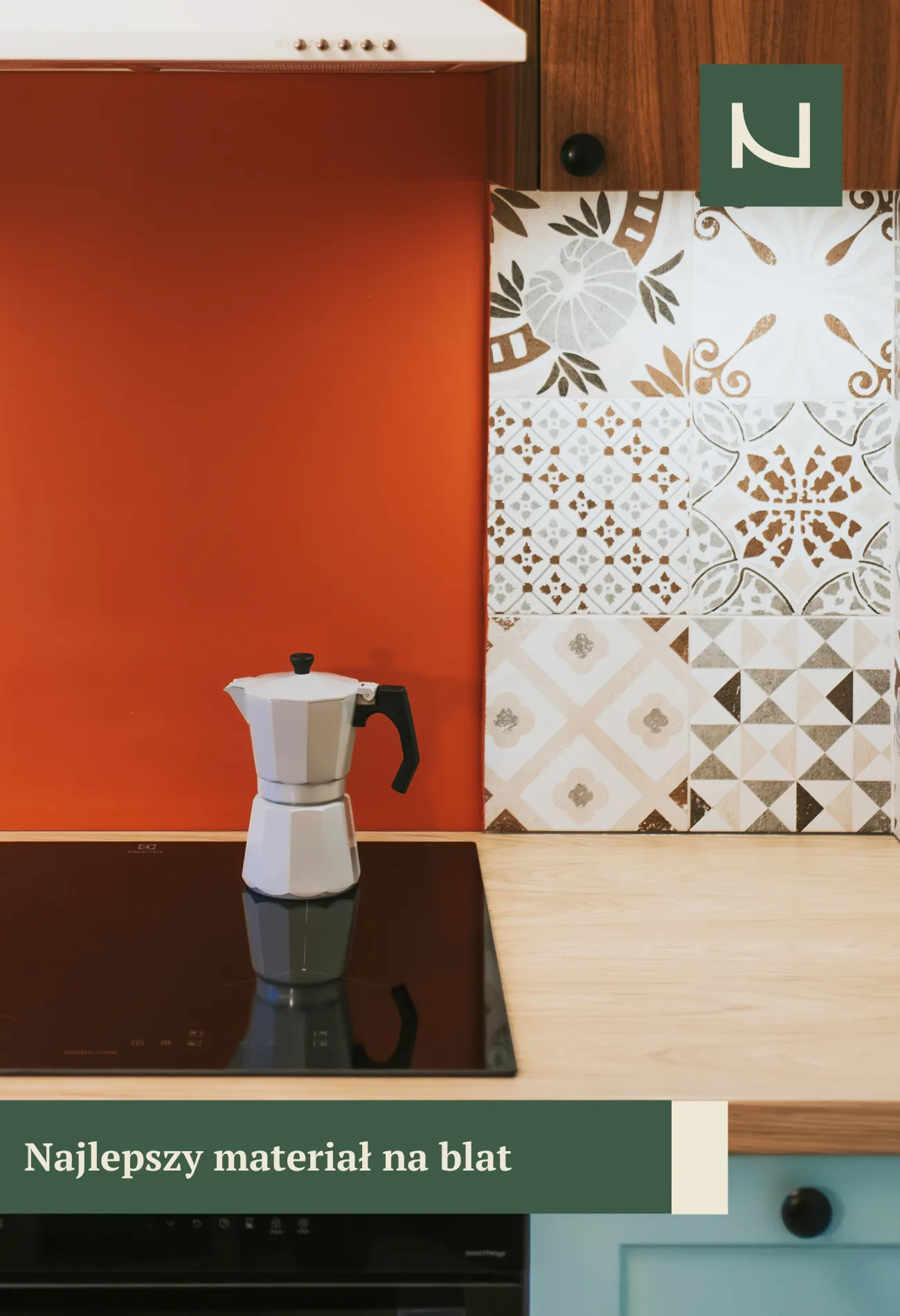
Which countertop is the most practical?
When someone asks what countertop is the most practical, they usually mean three things:
whether it is difficult to destroy, whether it is easy to clean and whether you don’t have to constantly “remember” about it.
Quartz sinters rank very high in this ranking . It’s a modern material with excellent performance. Sintered countertops are resistant to high temperatures, do not absorb stains, and are difficult to scratch with normal use. For many people, this is an almost maintenance-free solution that, once installed, simply works.
Quartz conglomerate countertops are also very practical . This combination of stone aggregate and resins creates a hard, low-absorption surface. In everyday use, this countertop withstands contact with water well, is resistant to most stains, and also looks very elegant.
Investors are increasingly choosing solid surface composites. Their great advantage is that they can be used to create large, seamless surfaces without visible joints. The countertop and sink can form a single, cohesive element, which is not only visually striking but also highly hygienic.
At the other extreme is the laminated countertop. Lightweight, easy to work with, and significantly cheaper. In many homes, this will be the most practical choice, as with proper installation and normal use, it will last for years without breaking the bank.
Which is better: composite or conglomerate?
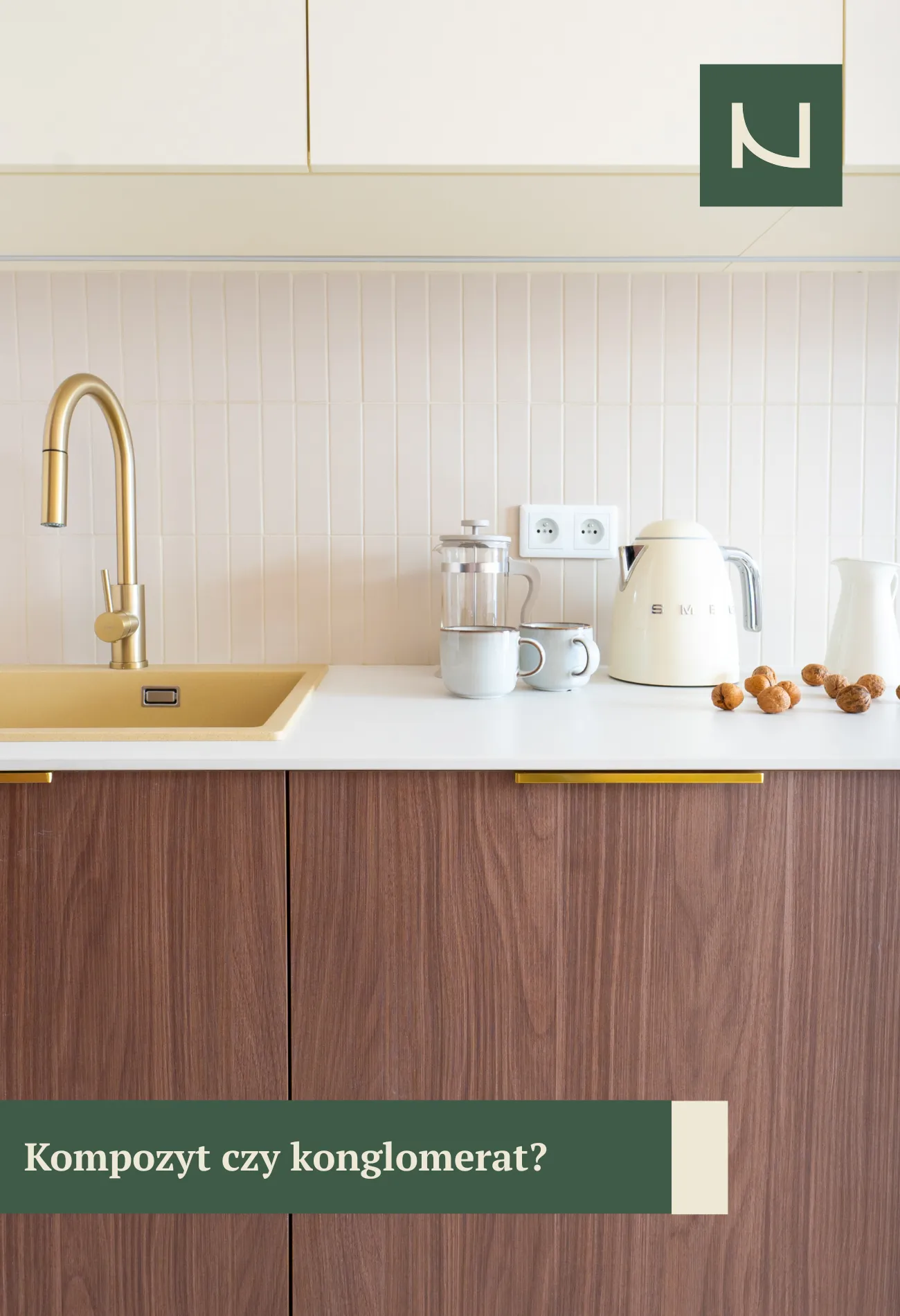
When considering what to choose for a kitchen countertop, many people at some point face a dilemma: composite or conglomerate? Both materials are modern, both are associated with high-end materials, yet they differ in properties.
Composite (solid surface) is a material made from a mixture of resins and mineral fillers. Its greatest advantage is the ability to create smooth, seamless surfaces. The seams between the slabs are virtually invisible, and the countertop can seamlessly transition into the sink or windowsill. This is a popular solution in modern, minimalist kitchens where details matter. Furthermore, if minor scratches appear on the countertop over time, it can often be lightly sanded and refreshed.
Quartz conglomerate is made by combining stone aggregate (e.g. quartz) with resin. Visually, it can be very similar to natural stone, but has better, more predictable parameters than it. It’s hard, scratch-resistant, and has low water absorption, so it doesn’t absorb stains easily. It also withstands daily contact with water.
If you want a very smooth, uniform surface and the ability to “conjure up” various shapes, a composite is a better choice.
If hardness, durability and a stone-like appearance are your priorities, conglomerate will be a better choice.
Advantages and disadvantages of laminate countertops
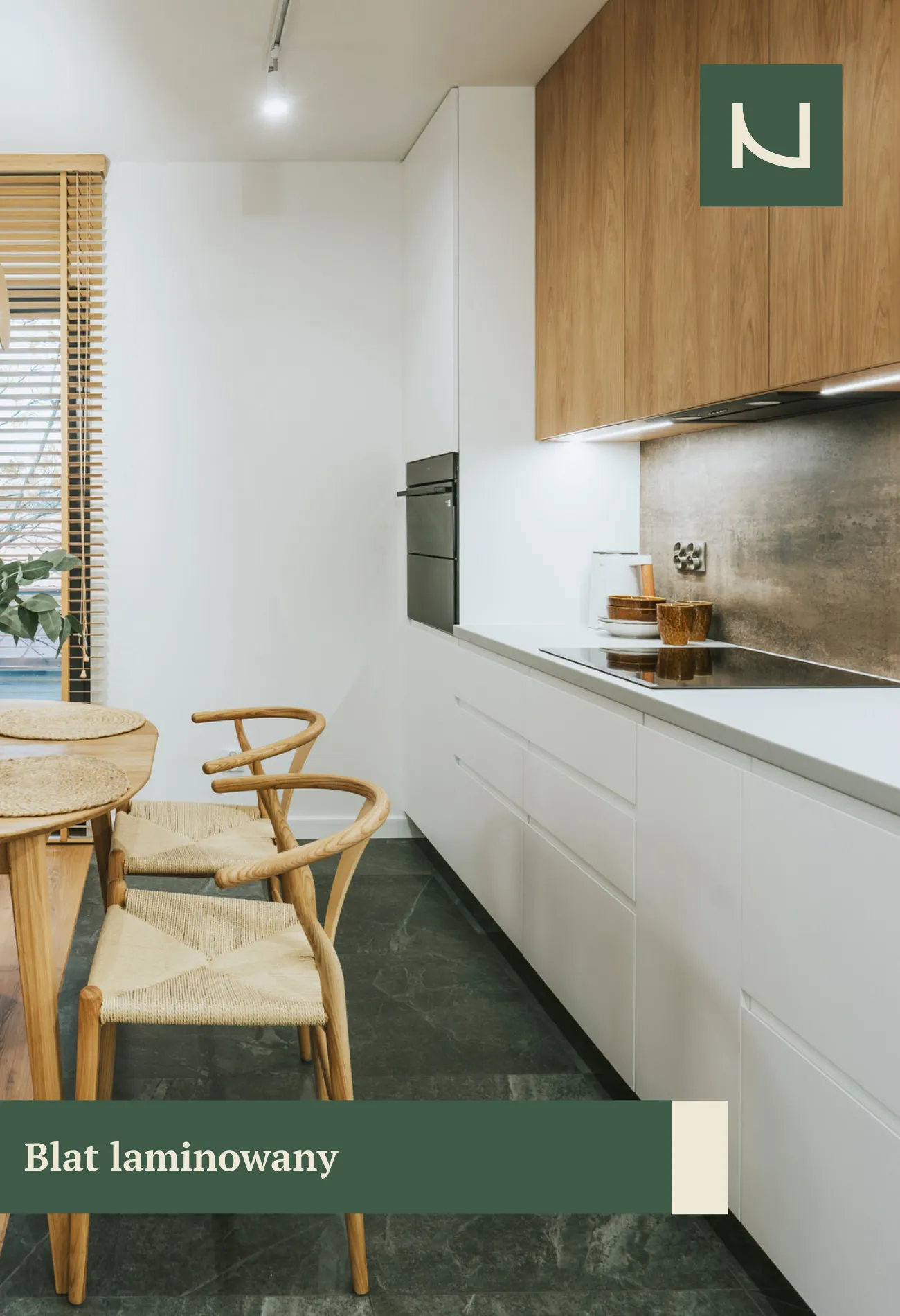
Laminated countertop It’s still the most common solution in Polish kitchens, no wonder. With the rising prices of finishing materials, it’s hard to ignore an option that’s aesthetically pleasing, easily accessible, and significantly cheaper than stone or composite.
The laminate consists of a carrier board (usually chipboard) and a decorative layer protected by laminate. It’s this top layer that gives the countertop its appearance. Manufacturers offer dozens of decors: from classic oak and walnut, through concrete and steel, to imitations of marble and granite. Therefore, by choosing laminate, you can achieve the effect of a kitchen inspired by much more expensive materials at a relatively low price.
In everyday use, laminated countertops are user-friendly, relatively scratch-resistant, and easy to keep clean. and do not require special impregnation. Simple, gentle cleaning products and a soft cloth are sufficient.
Their weak point, however, is their sensitivity to moisture at the joints. and near the sink. If the edges are not properly sealed, water can penetrate the slab over time and cause it to swell. You also need to be careful with hot pots – if you put them down directly from the burner, they may leave a mark or discolor the surface.
To sum up: a laminate countertop is a great option for people who are looking for an aesthetic, economical solution and are willing to compromise on durability and resistance to extreme conditions.
Advantages and disadvantages of stone countertops
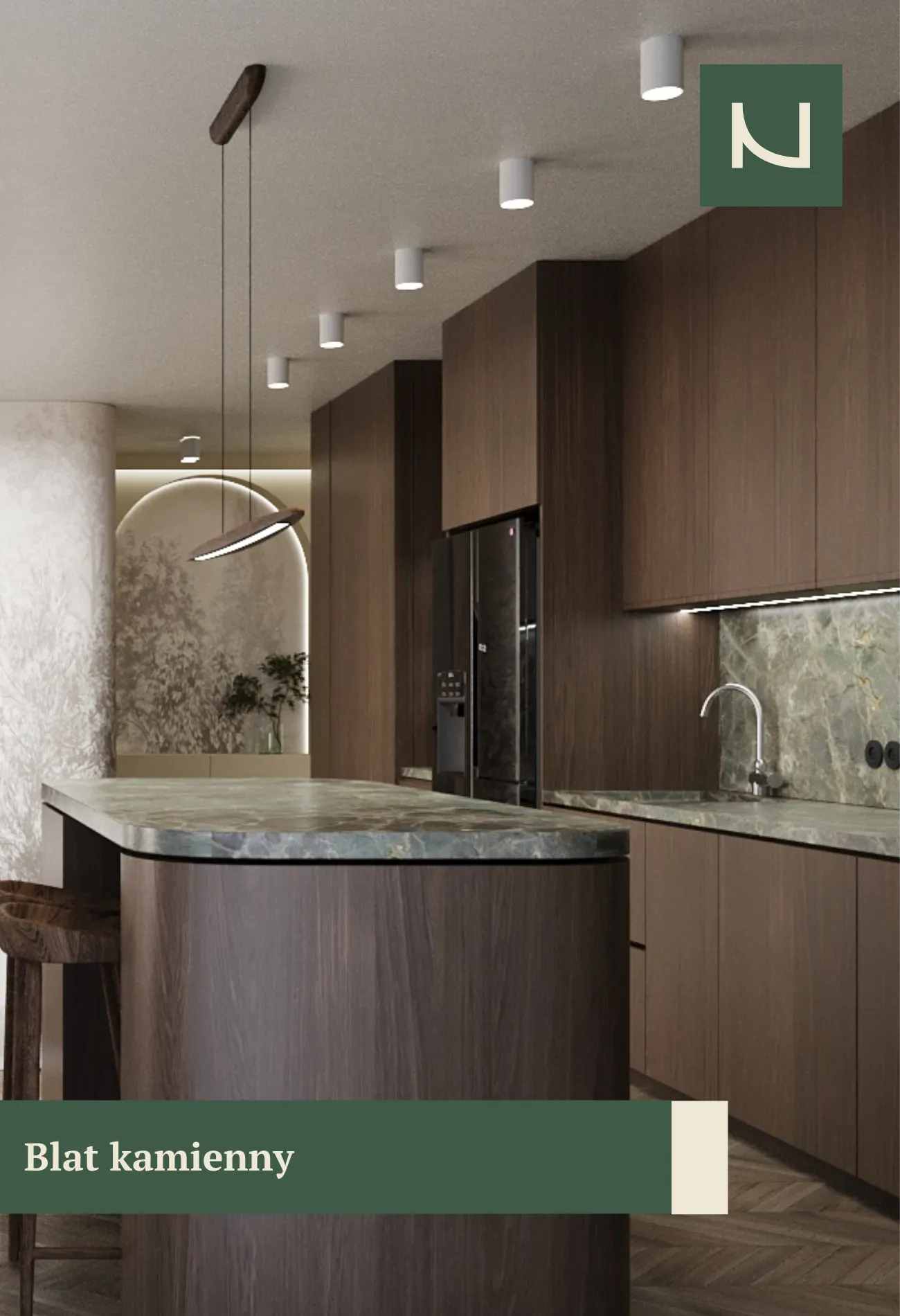
When we think of a kitchen that will last for years, a stone countertop often comes to mind. It’s hard to deny its charm. Natural veining, subtle color transitions, and cool elegance give a kitchen with such a countertop a solid and timeless look.
The most popular choice for kitchens is granite and various types of quartz-granite. These stones stand up well to intensive use: they’re hard, heat-resistant, and scratch-resistant. You can safely place a hot pot or baking tray on them, and with normal use, they won’t show any signs of wear.
However, stone countertops have their own requirements. First of all, they are heavy, which means the kitchen cabinetry must be well-designed and adequately reinforced. Additionally, many types of stone requires periodic impregnationto reduce stain absorption and make cleaning easier. For more porous stones, such as marble, caution is even more important. In contact with acids (e.g. lemon juice, wine) discoloration may occur.
The biggest disadvantage of stone countertops is , of course, the price. It’s an investment typically planned for long-term use. However, for many people, it’s an expense that pays off both in the comfort of everyday kitchen use and in the perceived value of the entire interior.
Summary: What will be the best kitchen countertop for you?
The question “what should a kitchen countertop be made of?” should be immediately linked to other questions: how intensively you use the kitchen, what budget you can allocate for finishing, and how much care you want to take of your countertop on a daily basis.
- If you are looking for a solution that is as maintenance-free, durable and resistant as possible, consider sintered quartz, granite or conglomerate.
- If you want a uniform, modern surface and the ability to form unusual shapes, a solid surface composite will be a good choice.
- If budget is a priority and you want a wide selection of designs, a laminate countertop will work well.
- If you love natural materials and the warmth of wood, and are not afraid of regular maintenance, you can choose a wooden countertop, consciously accepting its delicacy.
A properly selected kitchen countertop will not only make preparing meals more convenient, but the entire kitchen will gain a cohesive, refined character. It’s worth taking the time to make an informed decision, rather than choosing a material just “on the spur of the moment” or based on fashion. And if you’re still unsure, watch the video below, where we conducted a comprehensive test of kitchen countertops !