Interior doors influence the perception of the entire interior, even if at first glance they seem to be just a detail. The differences between individual door types are not limited solely to the appearance of the door leaf. The construction, installation method, tolerance for wall irregularities, and the acoustic comfort of the rooms are also important.
Before making a purchasing decision, it is worth understanding the difference between rebated and non-rebated doors and where hidden doors fit into this equation.
Are non-rebated doors better than rebated doors?
This question comes up frequently, but it can be confusing. Non-rebated doors aren’t technically superior. They simply offer a different solution., designed with a different visual effect and a different interior character in mind. The differences begin at construction and assembly level.
Rebated doors are a classic and universal solution. The door leaf overlaps the frame, helping to conceal minor wall irregularities and providing greater installation tolerance. This makes these doors more resistant to everyday use and performs well in both new homes and older interiors.
Non-rebated doors, when closed, create one even surface with the door frame. They create a modern and uncluttered effect, characteristic of minimalist arrangements. However, they require greater precision in execution, making any wall curvature or installation imperfections more visible.
Therefore, when comparing rebated and non-rebated doors, it is not worth looking for a “better” solution. What is much more important matching the door to the interior style, finishing stage and expected end result.
What is the difference between rebated and non-rebated doors technically and visually?
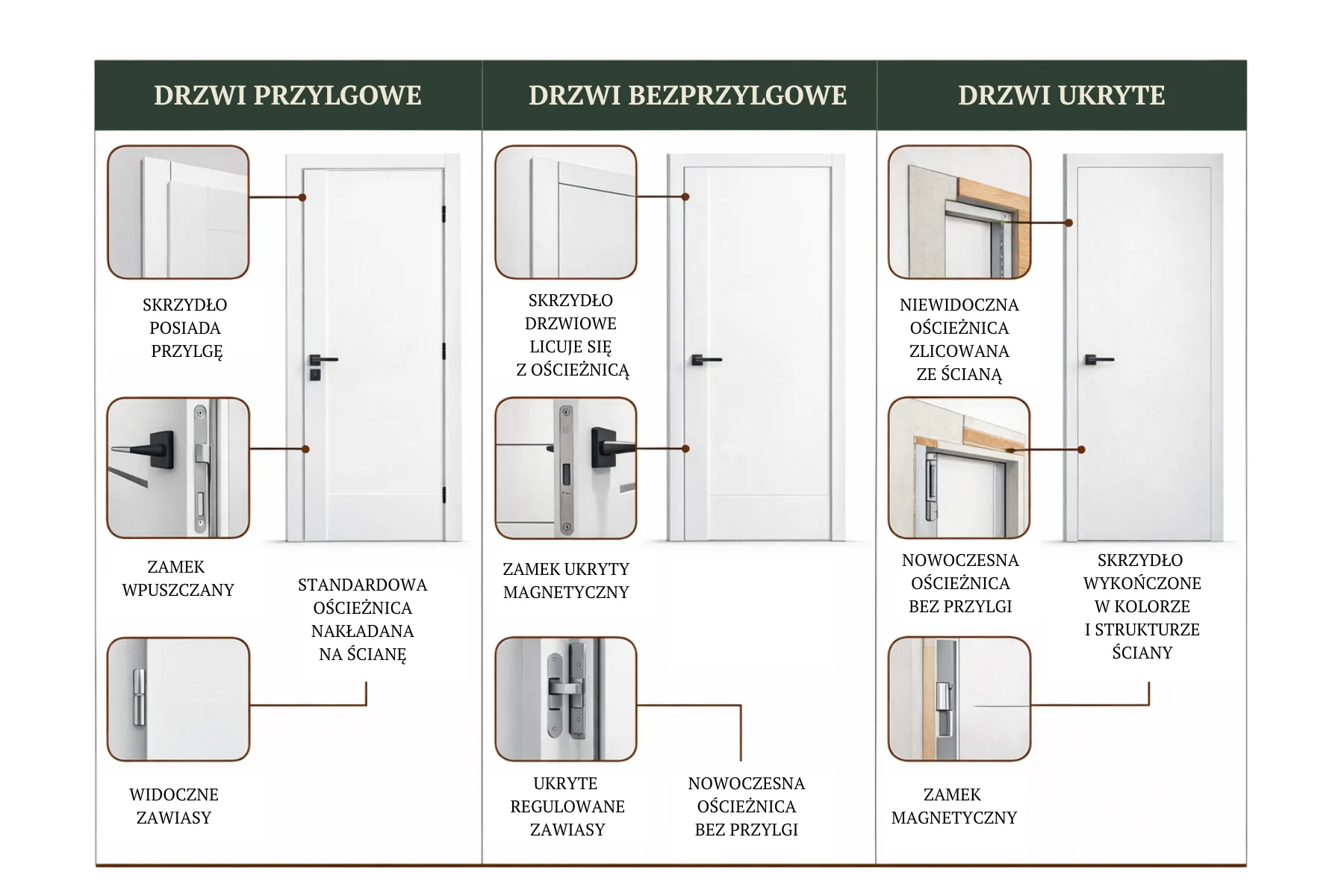
The differences are best seen when we look at the door not as a single leaf, but as an entire system. In rebated doors, the leaf overlaps the frame , leaving the hinges visible. The door-to-wall contact line is softer, and slight wall deviations are less noticeable.
In non-rebated doors , the door leaf is flush with the frame and the hinges are hidden. The door’s line is simple and geometric. This solution looks very modern, but it also reveals any imperfections in the walls and installation more quickly. Therefore, the door Non-rebated doors look best where the entire interior has been designed and constructed with great precision.
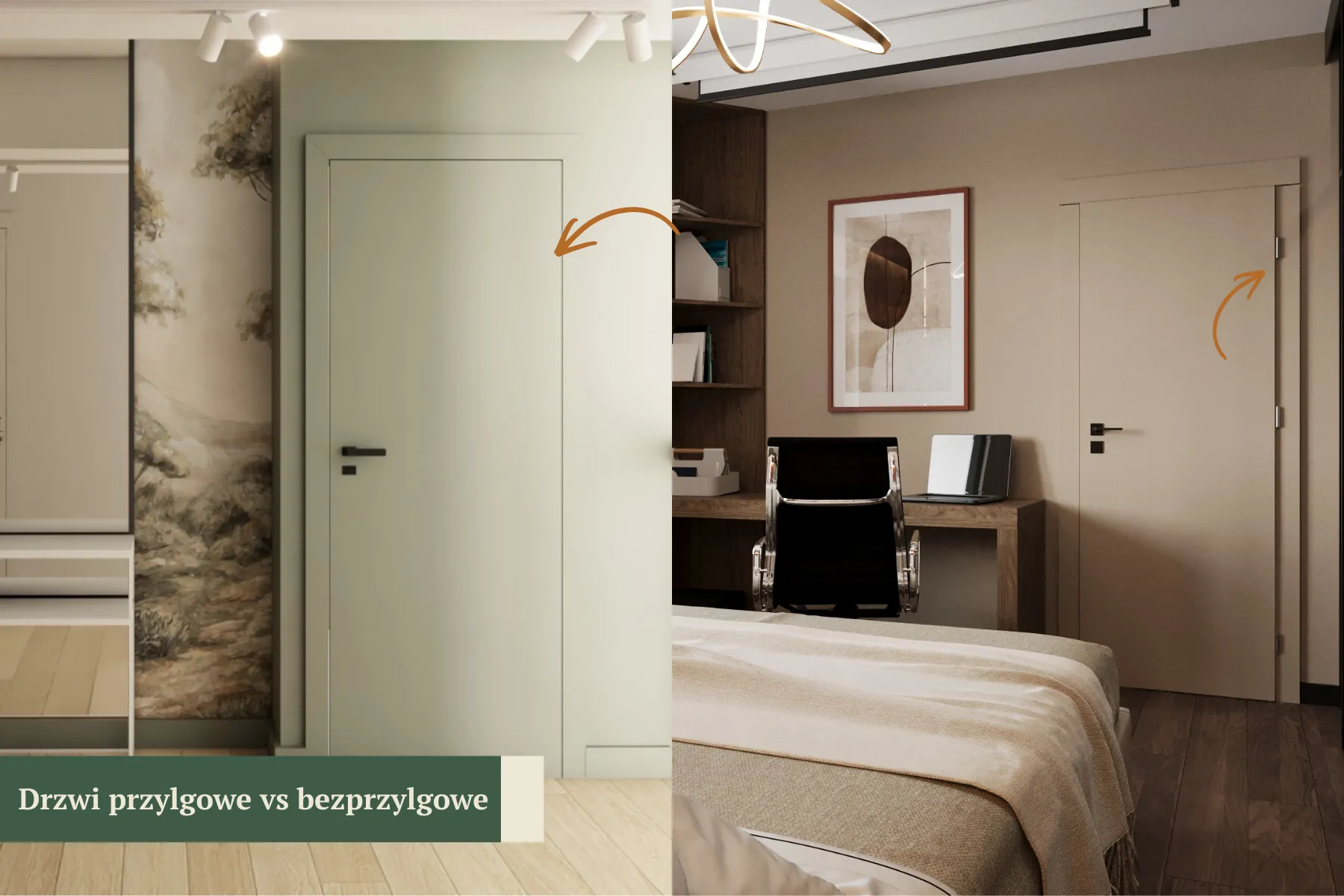
What is the difference between hidden and non-rebated doors?
This is one of the most frequently confused topics, although in practice the difference is clear. non-rebated remain a visible element of the interior. The wing and its outline are visible, although When closed, the entire unit creates a flush surface with the door frame. Hidden doors go a step further. The door frame is concealed within the wall, and the door leaf can have the same finish as its surface. As a result, doors cease to be a separate design element and begin to function as part of the interior architecture. This solution is visually striking, but at the same time much more demanding in terms of design and execution.
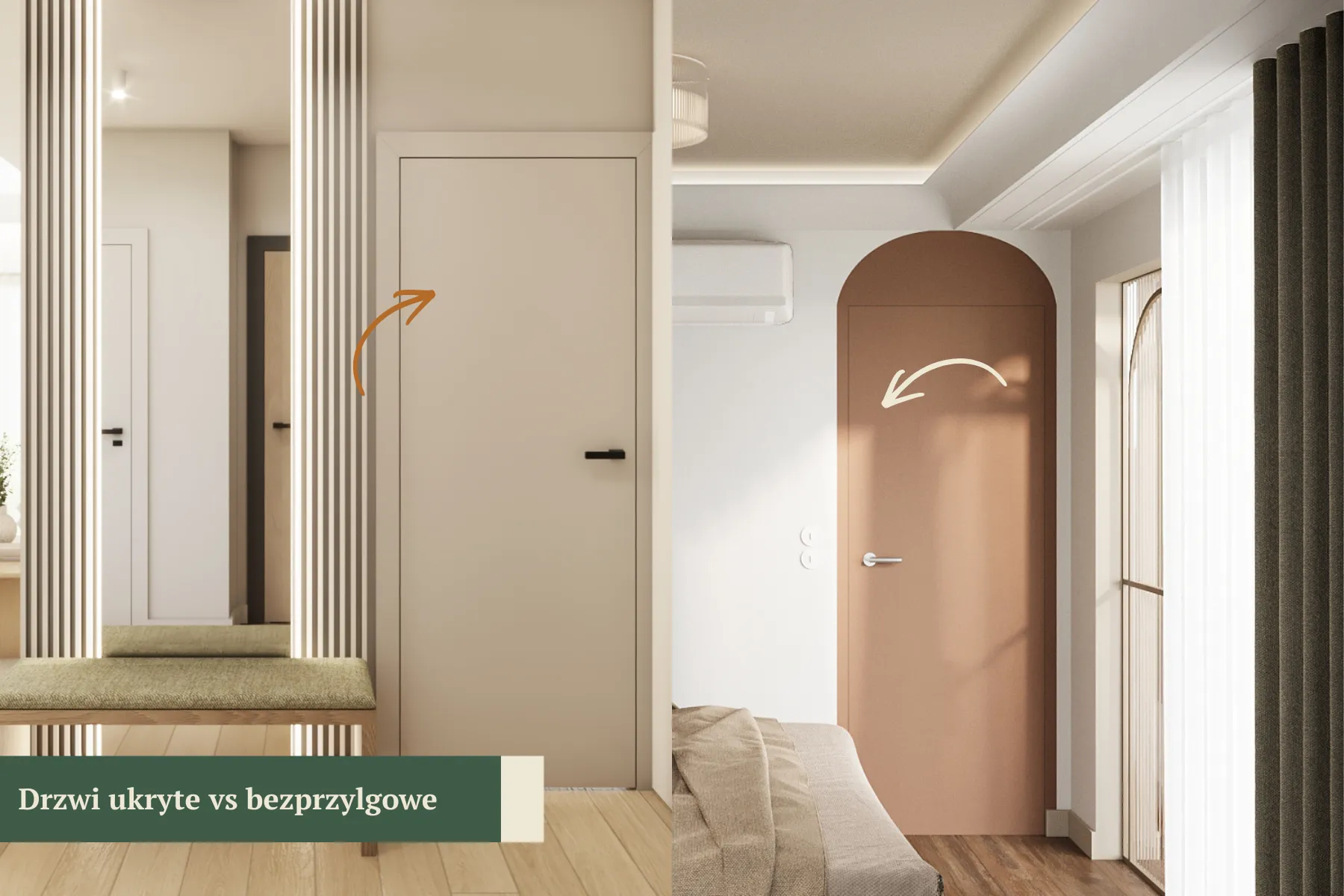
What are the disadvantages of hidden doors in practice, not theory?
Although hidden doors are often considered the most refined solution, in practice they have their limitations. They require precise design and consistent execution of all finishing touches. They don’t tolerate mistakes. Every wall curve, plaster work, or change of plan during renovations quickly becomes apparent.
Such doors are also less flexible when it comes to subsequent interior design changes. and more difficult to modify. They work best where the entire interior concept has been well-planned from the outset and implemented without compromise. Therefore, it’s not worth forcing them.
Are non-rebated doors more expensive than rebated doors?
Yes, but the difference is not only in price door leaf. When comparing rebated and non-rebated doors, you need to take into account the entire door system and the installation method. Non-rebated doors are more technologically advanced, which affects the cost of materials and labor.
Different frame design and hidden hinges require greater precision of execution. assembly takes longer and requires experience, because there’s no room for elements that mask wall imperfections. When scaled down to the entire apartment, the price difference can be noticeable.
Therefore, in practice, intermediate solutions are often used. Non-rebated doors appear in the most exposed areas, such as the corridor or living area, while rebated doors are installed in other rooms.
When to install non-rebated and hidden doors?
Although non-rebated and concealed doors are often discussed together, in practice they require different approaches. Non-rebated doors do not require planning at the wall construction stage. In most cases, they are installed on finished surfaces after wet work is completed, similar to rebated doors.
The difference lies in aesthetic requirements. Rebated doors reveal wall curvatures and construction imperfections more readily, although they do not require prior installation of a door frame.
The situation is different in the case of hidden doors.. Here the door frame becomes an element of the wall and must be installed before plastering and finishing coats. Only then can the wall surfaces be correctly aligned and the door leaf be flush with the wall surface. In this case The decision on the choice of door should be made at the design stage.
The most common mistakes with non-rebated and hidden doors
A common mistake is deciding on doors too late. Investors choose non-rebated or concealed doors after the walls are already plastered, leading to compromises and compromising the visual effect.
Inaccurate wall preparation can also be a problem . Non-rebated doors don’t mask unevenness, so any curves become visible after installation. Errors also occur when the design doesn’t take into account the final thickness of the wall coverings.
Concealed doors are often treated as standard, installed at the end of a renovation. This approach fails to achieve the desired effect. Therefore, when comparing rebated and non-rebated doors, not only the appearance is crucial, but also the timing and method of installation.
Summary
Choosing a door is not a matter of trend, but a conscious design decision .
-
Rebated doors are safe, versatile and more forgiving.
-
Non-rebated doors are modern, but require precision.
-
Hidden doors are effective, but only if the entire interior is planned for them from the beginning.
If you’re in doubt, it’s best to consider rebated vs. non-rebated doors in the context of the entire interior, not as a separate purchase. This is precisely where good interior design truly makes a difference. So, if you dream of a perfectly planned interior that will allow you to install your dream doors, plan your design and finishing with Nilen Concept.