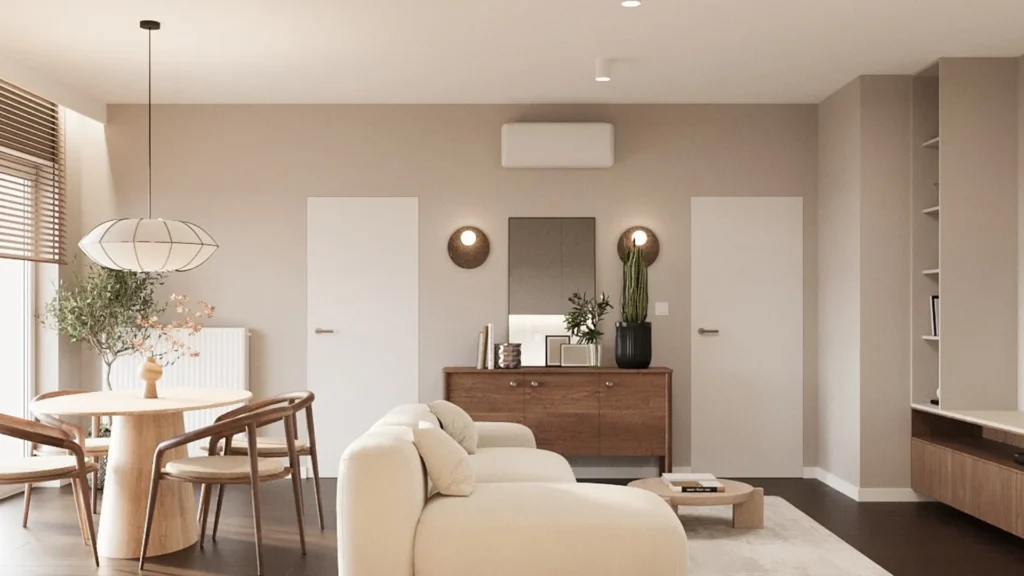
Choosing flooring is one of the decisions that most significantly impacts the overall feel of a room. Color and material are important, but so is the installation. A herringbone floor can add elegance and dynamism to a space, while a classic, simple installation brings calm and minimalism. Which solution is best for you? It all depends on the nature of the interior, its square footage, and the effect you want to achieve.
Herringbone flooring and classic flooring – the most important differences
The difference between a herringbone and a straight pattern isn’t just about pattern. It’s a completely different way of creating a room’s atmosphere.
The herringbone floor creates a decorative rhythm. Patterns attract attention, lend elegance to the space, and make the floor a fully-fledged design element. Often, they create the “wow” effect upon entry.
In turn, the classic arrangement of boards works more smoothly. Lines lead in one direction, organize the space, and allow other elements to speak for themselves: furniture, lighting, and wall art. This solution more neutral, easier to integrate into various styles.
It is also worth remembering that herringbone is usually more expensive to install and requires greater precision, while straight installation is faster and more economical.
Is it worth laying the floor in a herringbone pattern?
It’s worth it provided that fits the interior concept. Herringbone floor It works particularly well in spaces where elegance and timelessness are important. Modern classic, Parisian, or Japandi interiors gain depth and character thanks to it. It’s also a great choice for high-end apartments where detail matters.
In practice, we often use herringbone patterns in living rooms and entryways. These areas typically have the largest space, so this type of flooring can really make a statement. In very small, heavily built-up rooms, the effect can be less clear, so a decision should be preceded by an analysis of the entire functional layout.
Does herringbone make a room smaller?
This is one of the most frequently asked questions.
The herringbone floor itself does not optically reduce the interior. The impression of spaciousness is primarily determined by color, contrast, and the number of divisions in a room. A bright, natural herringbone pattern, consistently arranged throughout the apartment, can even give the space elegance without overwhelming it.
Much more important is whether the flooring is consistent throughout the entire space, with thresholds and different patterns in individual rooms. The fewer divisions, the greater the impression of space, regardless of whether you choose a herringbone or straight pattern.
Is herringbone flooring fashionable?
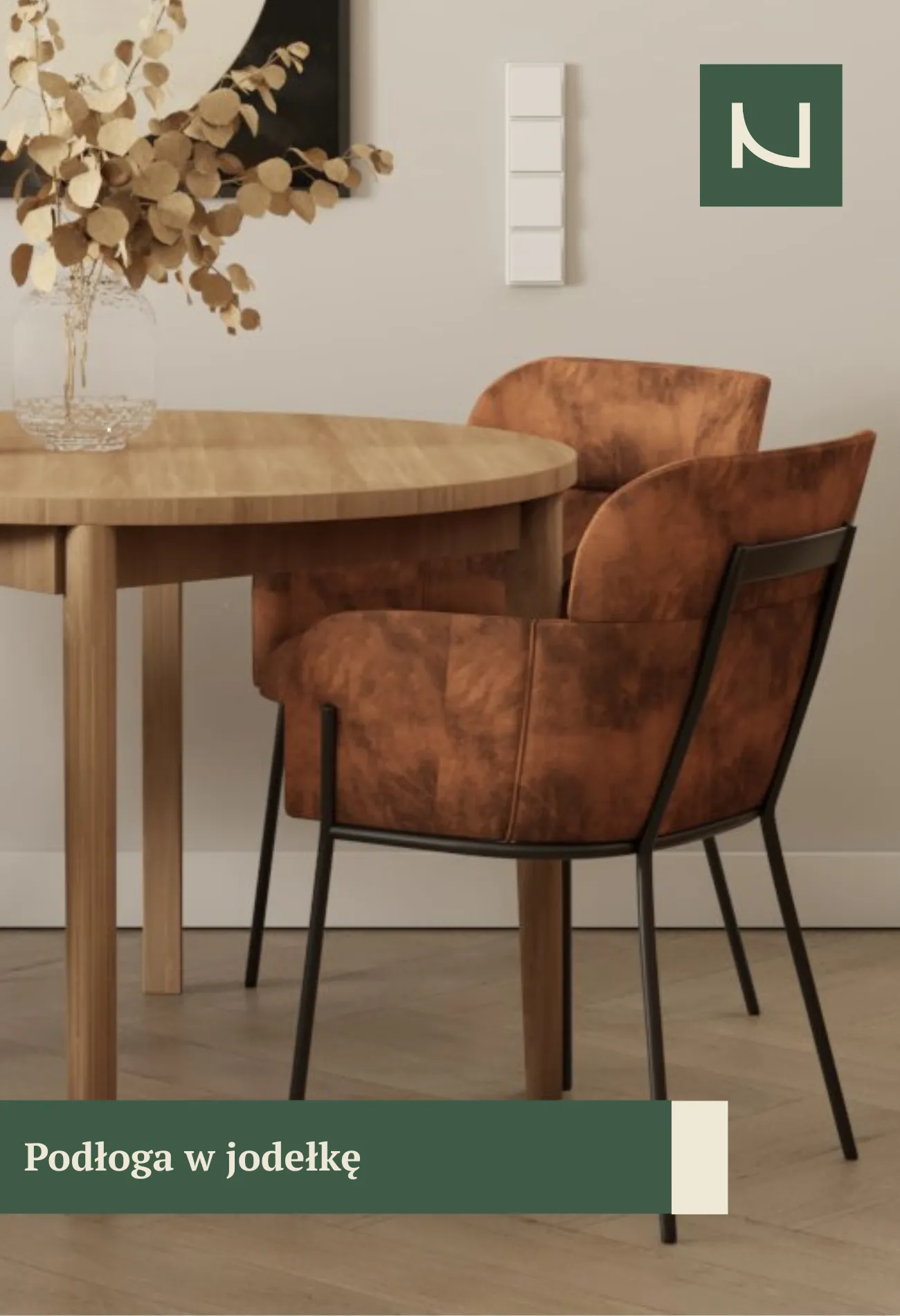
Yes, but more importantly it is timeless. Herringbone flooring has been a staple in interior design for hundreds of years. It’s associated with classic townhouses and elegant apartments, but today it’s also found in modern interiors. Current trends are dominated by lighter wood tones and larger formats, which lend the pattern a lighter feel.
This isn’t a passing fad that will fade away after a single season. A well-designed herringbone pattern holds up even after a dozen or so years, especially if it’s kept in natural colors.
When is a classic, simple flooring better?
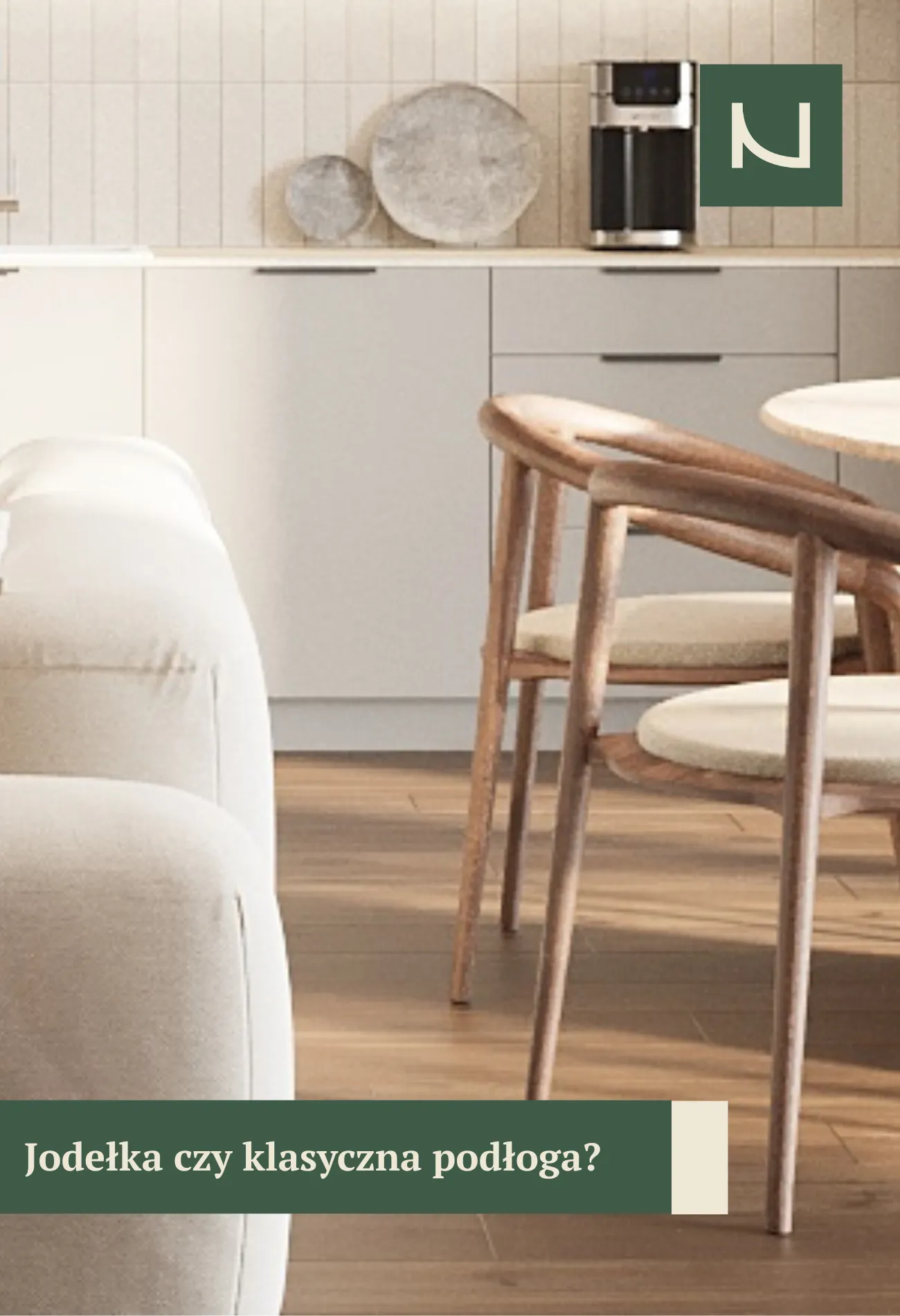
The classic arrangement is a more universal solution. It works well in minimalist interiors, in investment apartments and where the floor is to be a neutral background for other elements.
In rental apartment designs, we often recommend a simple layout; it’s stylistically safe, easier to replace, and less visually demanding. In modern, understated arrangements, it can emphasize the simplicity and orderliness of the space.
Simple boards also work well with very expressive furniture or strong color accents. In these cases, the floor shouldn’t be the center of attention.
Summary of how to make a good decision?
Choosing between a herringbone and a classic layout shouldn’t be based solely on trends. The key is what function should the floor perform in your interior and how will it fit into the overall design concept.
Before you make a decision, consider:
- Should the floor be the main decorative element or a neutral backdrop?
- Is the space open and spacious, or rather compact and densely built-up?
- Do you want elegance and expressive detail, or a calm, minimalist effect?
- Does the budget include more demanding installation?
A herringbone floor enhances the visual appeal of an interior and adds character. A classic layout offers greater versatility and design flexibility. Most importantly, however, the decision should be part of a well-thought-out design that reflects the lifestyle, square footage, and functional layout of the apartment.
If you’re unsure which solution is best for you, it’s worth consulting with us at the concept stage. interior design allows you to view the floor not as a single element, but as the foundation of the entire design. This will help you avoid costly mistakes and achieve a cohesive, refined space that will last for years.