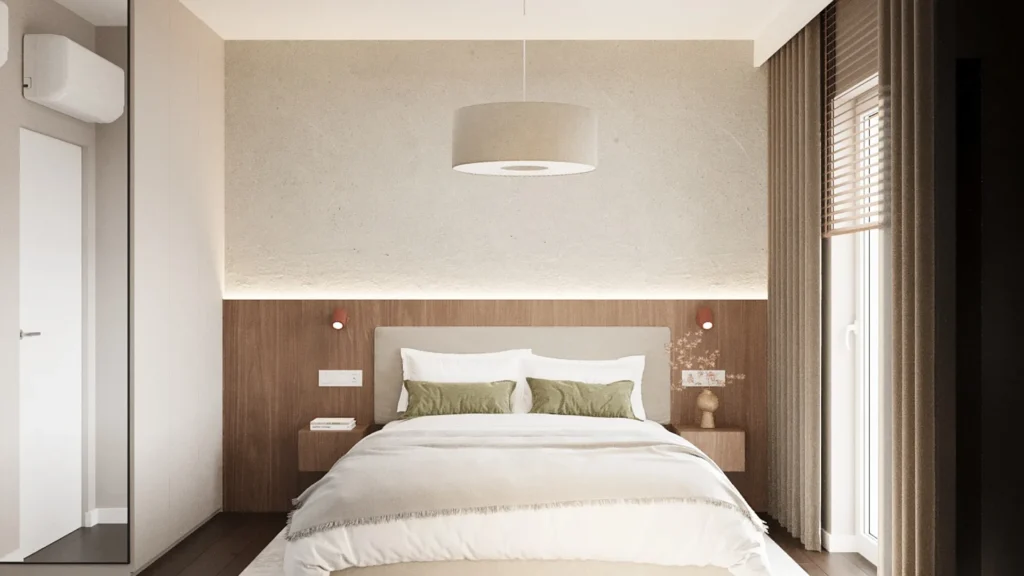
If you are wondering which skirting boards to choose, treat this element as the icing on the cake for the entire finish. Well-chosen moldings can accentuate the interior’s style, improve the room’s proportions, and aesthetically seal the wall-to-floor junction. In this guide, we’ll show you what to consider to ensure a cohesive and practical choice.
What color should you choose for skirting boards?
One of the most common questions is: what color should the skirting board be matched to? To the floor, to the wall, or maybe to the door? The answer is: it depends on the effect you want to achieve.
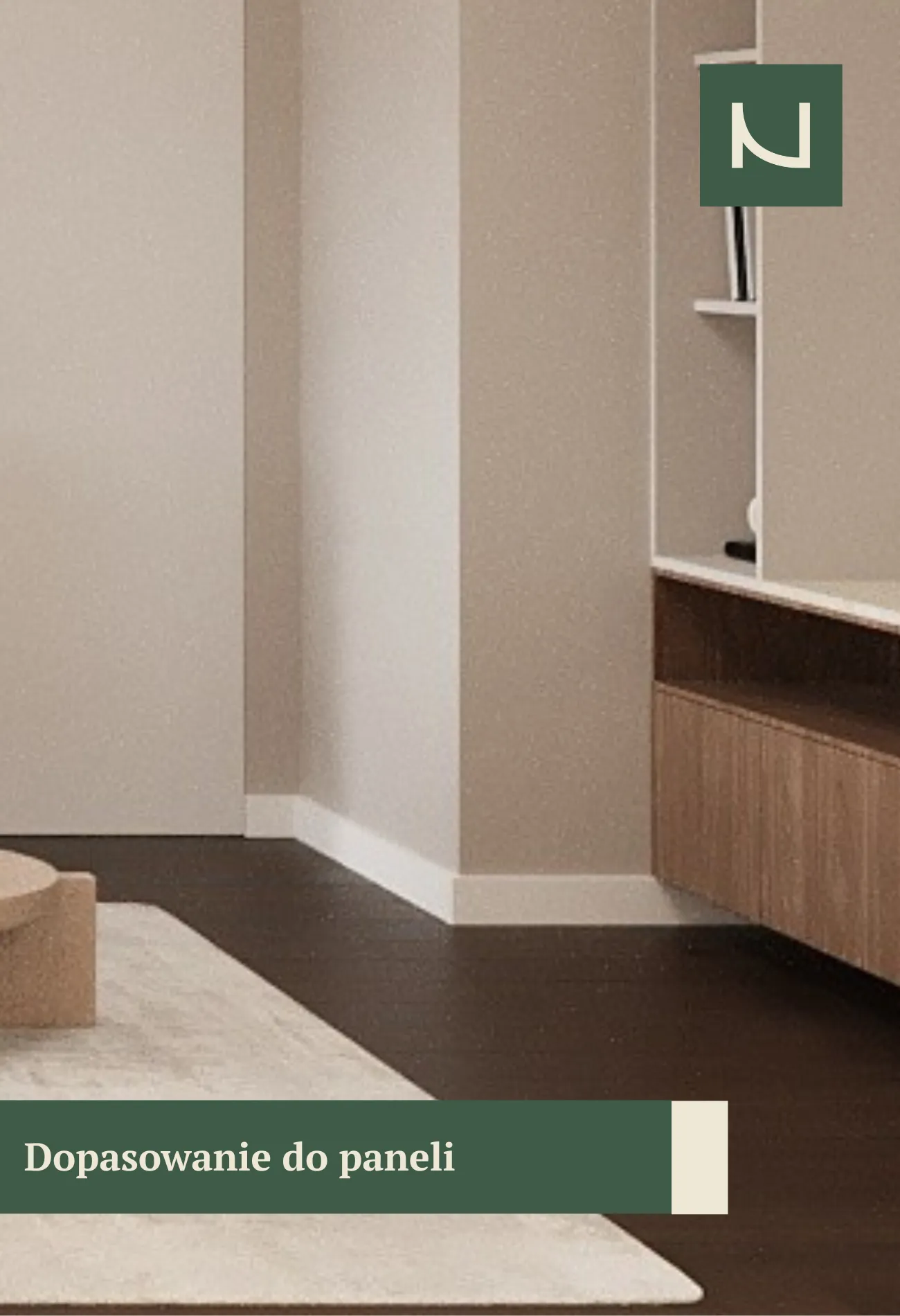
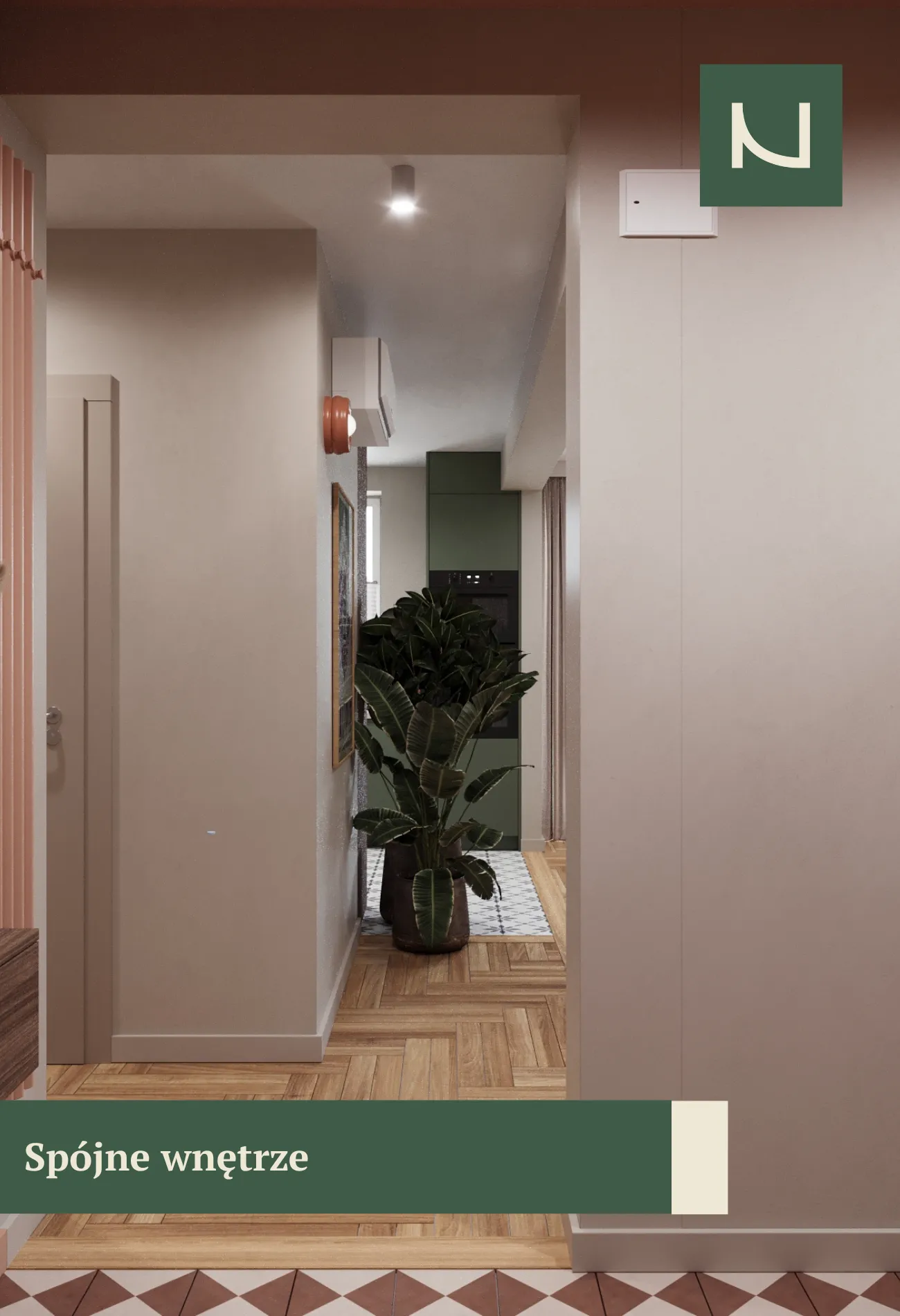
If you want a calm, harmonious interior, matching the strip to the wall color works very well.. In this variant, the strip becomes almost invisible, without introducing an additional dividing line or visually “cutting” the height of the room. This solution is often used in modern and minimalist designs, especially with taller strips intended to provide an elegant wall finish.
Matching the skirting board to the floor color is a more classic option. It works particularly well with wood floors and panels with a distinct grain pattern. In this arrangement, the strip creates a natural extension of the floor and clearly separates it from the wall.
The third popular option is to match the strips to the door joinery. If you have white doors and trim, a white strip is a logical complement. It’s one of the most versatile and secure solutions, complementing most interior styles.
In our design practice, we most often recommend simple, white MDF moldings. They are timeless, neutral, and offer great flexibility when it comes to future wall color changes.

How to match strips to panels?
Choosing skirting boards for your panels is a topic where it’s easy to make random decisions. It’s worth remembering that The skirting board does not have to be the same color as the floor, what is more important is whether the whole creates a coherent composition.
White strips work well with light-colored panels, such as natural or bleached oak. They create a subtle contrast without overwhelming the room. If you’re looking for a more uniform effect, you can choose strips in a shade similar to the floor, although a perfect match can be difficult, especially with panels with a pronounced texture.
Dark panels offer two options. You can emphasize the contrast and use a white strip to brighten the lower part of the room. Or, you can choose a strip that matches the floor color for a more subdued, elegant effect.
In addition to the color, the height of the strip is of great importance. In standard apartments with a height of around 260 cm, moldings in the 6-8 cm range are most commonly used. In taller rooms, 10-12 cm can be used, giving the space a more refined feel. A molding that is too low looks disproportionate in a high room, while a molding that is too high in a small room can visually reduce the space.
Don’t forget about the technical function either. must cover the expansion gap at the panels, Therefore, its thickness and profile should be matched to the floor type. It’s also worth checking whether the skirting board allows for cable routing—a small detail that significantly improves the aesthetics of the interior.
How to calculate how many skirting boards you need?
While this may seem simple, in practice, many people buy too little material or significantly too much. To avoid stressful visits to the store during installation, it’s worth carefully calculating your needs.
- First , measure the perimeter of the room by adding up the lengths of all the walls. Then, subtract the width of the door openings; moldings are typically not installed in these areas.
- It is worth increasing the obtained result by about 5-10% to account for cuts, corners and possible assembly errors.
- Finally, divide the total length by the length of a single strip (usually 2.4 m or 2.5 m). Always round the result up to the nearest whole number. For larger apartments, it’s a good idea to break down the needs room by room; this simplifies logistics and cost control.
Which skirting boards should you choose to make the interior cohesive?
Modern designs are dominated by simple, smooth white MDF strips. Classic designs often feature taller, delicately milled profiles. These are also becoming increasingly popular. flush-mounted or flush-mounted strips, however, their installation requires planning at the finishing stage.
The most important thing is that the decision on skirting boards should not be detached from the overall interior design. The board should “talk” to the floor, doors, and walls, not compete with them for attention.
Summary
If you’re wondering which skirting boards are best for your home, consider four key factors: color, height, material, and technical function. These are details that can subtly emphasize the character of a room or, if chosen incorrectly, disrupt its proportions.
In a well-designed interior, moldings aren’t a random addition. They’re an integral element of the design, just as important as the flooring, doors, or built-in furniture.
If you’re finishing your apartment and want to ensure that all the elements match, from the panels to the baseboards, it’s worth considering these elements at the interior design stage. This will help you avoid chaotic decisions and costly rework at the end of the project.